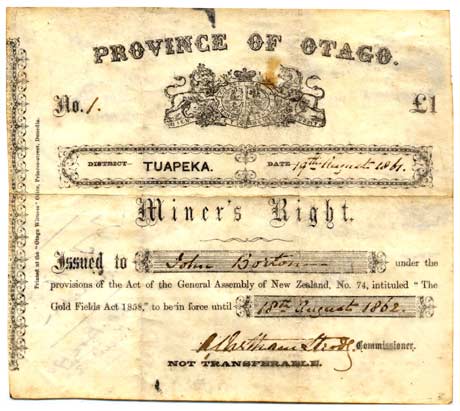
Searching for gold at Waipori wasn’t as simple as digging up some ground to extract the precious yellow metal. Mining was regulated in New Zealand from the early days of European settlement, and before anyone could mine or extract gold they had to have permission to do so. This permission was called a “miner’s right”.
In the early days prospecting was generally permitted without a miner’s right, because authorities wanted discoveries to be made. Walking over land and looking for gold visually or by simple testing such as panning a creek briefly was generally OK. Once a person wanted to stake a claim, modify a site or extract gold, they needed official permission. Later a miner’s right was needed for prospecting too.
There was mining legislation in New Zealand even before the first major gold rush, which was at Gabriel’s Gully near Lawrence in 1861. A mining commissioner was appointed to that gold field (the Tuapeka gold field) in August 1861 and the same month he issued the first miner’s right in New Zealand: to his brother-in-law John Borton!
Regulation of mining evolved as mining developed. Miner’s rights gave much more than permission to mine, and covered the use of land, water and timber. Mining Wardens oversaw goldfields and were like a mayor, judge and disputes arbitrator all rolled into one. Warden’s Courts played a vital role in regulating the mining industry, managing property rights and maintaining order in isolated and frequently rowdy boomtown communities.
These original mining rights from the late 19th-century are important mementoes of the glory days of gold dredging at Waipori.
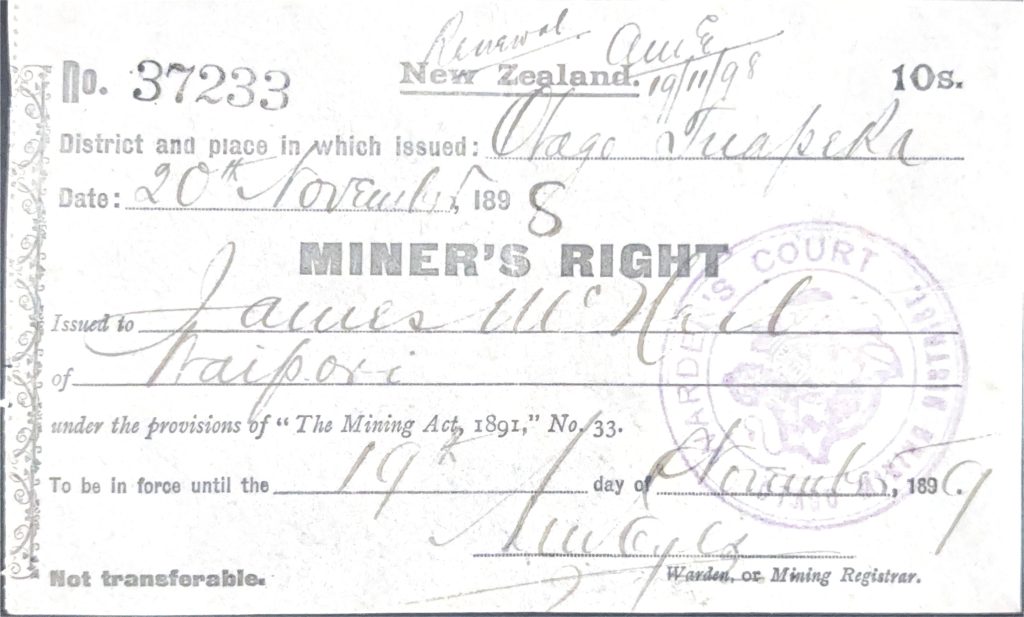
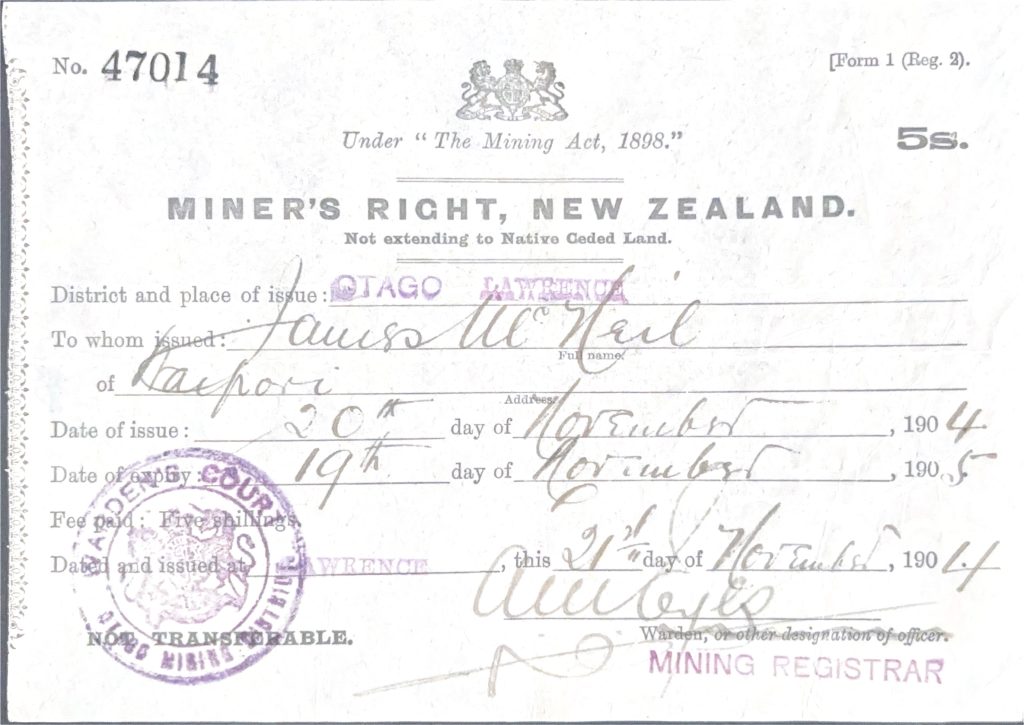
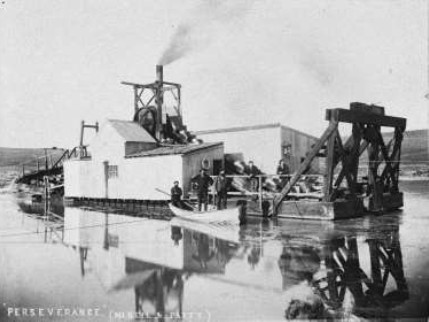
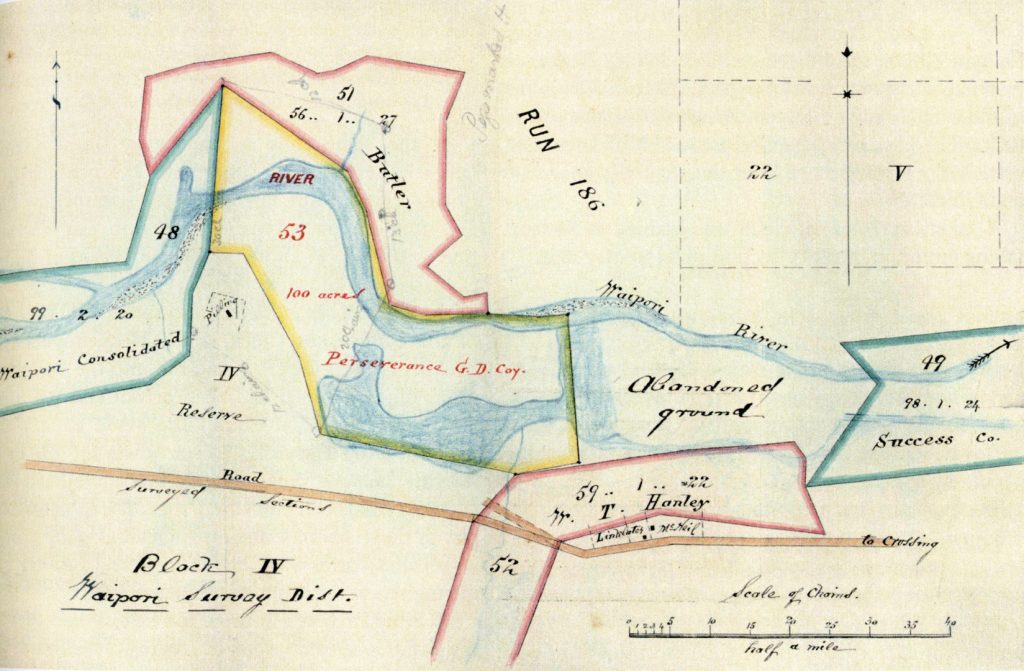
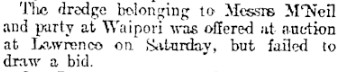
James McNeil was one of six members of the partnership known as ‘McNeil and party’ established in 1890. They raised 6,000 pounds (more than $1.5 million today) in capital to build and operate a dredge they named The Perseverance.
Persevere they did. All but one of the six were working partners, with James McNeil the first dredge master. The dredge began work in January 1897 and was highly successful, stopping work only when the boundaries of their claim were reached. It was estimated that The Perseverance had recovered between 38,000 and 39,000 pounds worth of gold, or about $10 million in today’s money.